Research Overview
MAE has a strong history of commitment to innovative research and encourages active collaboration in cross-disciplinary activities. The department partners with industry and government to conduct research at the cutting edge of science and technology.
The Office of Assessment and Accreditation has selected Aerospace Engineering and Mechanical Engineering as two of the inaugural honorees for NC State’s Excellence in Assessment awards. This recognition is for degree and certificate programs that meet NC State’s expectations for high quality outcomes assessment, and additionally incorporate multiple best practices in their assessment processes aimed at improving student learning.
If you are an MAE faculty member, and you would like to update your research areas, please email [email protected].
Research Areas
Advancing Health Care
Our faculty apply mechanical engineering approaches to improve diagnosis and treatment for a variety of medical conditions, through improving medical imaging; computational modelling and simulation of medical conditions, surgeries, and other interventions; characterizing healthy and diseased tissues; and developing medical and assistive devices to improve therapies, mobility and quality of life.


Improving Energy and the Environment
We explore ways to support energy needs for the future, such as through harvesting energy from the wind and ocean and improving energy efficiency for existing energy sources including solar and combustion.
Exploring Land, Ocean, Air and Space
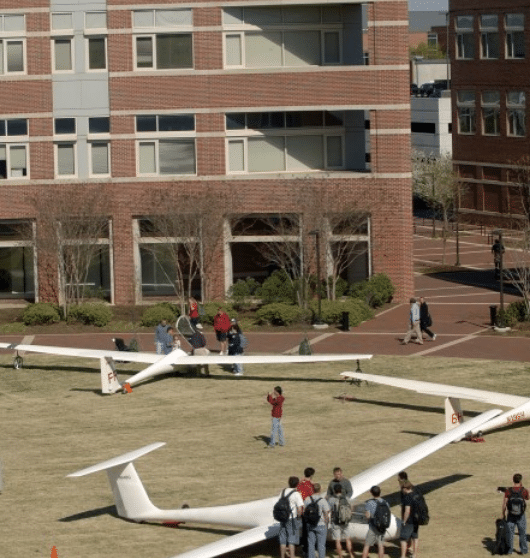
Our faculty work on spacecraft, aircraft, watercraft and land vehicle design, and on topics such as propulsion and fluid dynamics in order to establish the basis for future transportation across land, water, air and space.
Enhancing Safety and Security
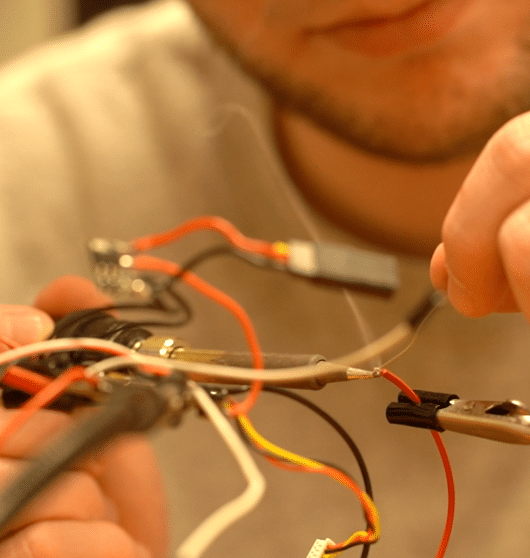
Our faculty develop non-invasive methods to monitor the structural health of materials and to predict how and when structures and materials are likely to fail. This can help design protective materials, and enhance the safety of engineered structures.
Innovating Manufacturing and Design
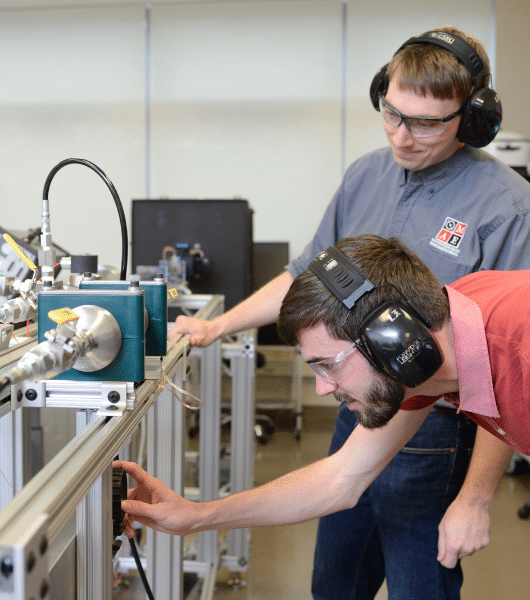
Our faculty develop methods and processes for the fabrication of new materials with the goal of improving our health, safety and environment. We also apply design thinking principles to determine how product value can be maximized.
Educating Tomorrow’s Engineers
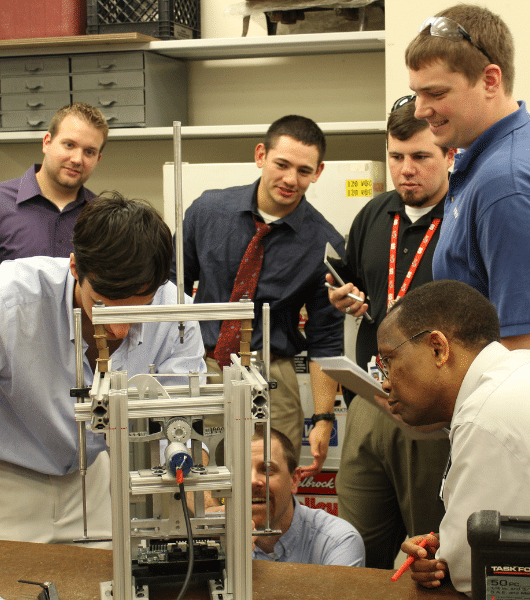
We strive to develop and apply cutting-edge engineering education practices to develop new engineers who understand fundamental concepts and can apply them to solve challenging problems.
Robotics, Autonomous Systems and Controls
We strive to enable autonomous and adaptive behaviors in robots and intelligent systems. This work integrates AI and control theory to ensure that robots can operate safely and efficiently in complex and uncertain environments such as defense, manufacturing, healthcare and disaster response.
