Larry M. Silverberg: Biographical Narrative
Silverberg is a dynamicist and educator.
Career
Larry M. Silverberg attended Virginia Polytechnic and State University (1976-1983). He studied under the dynamicist Leonard Meirovitch from 1977 until receiving the PhD in engineering mechanics in 1983. Silverberg joined the faculty at North Carolina State University in 1984. Over his career, Silverberg is credited with developing applied and theoretical methods that advanced the foundation of ordinary and spacetime dynamics.
Personal
Dr. Silverberg was born 5 November 1957, in New Canaan, Connecticut. He was one of four children by his mother Marian Stern and father Jeroll Silverberg, who was a prominent lawyer in Connecticut. Larry has a twin brother David Silverberg, and two sisters Ellen Silverberg and Phyllis Koren. When young, Larry’s mother married Robert Pinsly and she adopted his children – Bernard (Buzzy) Pinsly and James Pinsly. In 1971, Marian and Robert moved to Israel, taking with them Bernard, James, Larry and David. Larry and David lived in Israel until 1976. Between the ages of 15 and 18, Mar (Mr.) Ben Nathan taught Larry Silverberg mathematics. Silverberg credits Ben Nathan with giving him a strong mathematical foundation to build on. In 1976, Silverberg entered Virginia Polytechnic Institute and State University (now Virginia Tech). He conducted research under the guidance of the renowned dynamicist Leonard Meirovitch from 1977 until receiving the PhD in engineering mechanics in 1983. Silverberg credits Meirovitch with giving him a strong foundation in dynamics. In 1987, Silverberg married Debbie Due and their daughter, Corinne Silverberg, was born in 1989. Early in his personal life, Silverberg enjoyed competitive basketball and later enjoyed studying basketball dynamics with his colleague Dr. Chau Tran. Today, Silverberg and his wife Debbie enjoy a quiet life in Apex, North Carolina.
Recent Publications
Books

In 2025 (1st Ed.)
From particles and waves to fragments of energy — reminiscent of the stars in the sky — the primitive stuff of the universe.

In 2024 (4th Ed.)
BOOK + KIT FOR LABORATORY INSTRUCTION
Larry M. Silverberg and Chau M. Tran, “Fundamentals in Analog Circuits,” promotional video by Great River Learning, entitled “Explore the Digital Textbook: Fundamentals in Analog Circuits: From Five Circuits to a PD Controller”
Magazine Articles
March 21, 2025
Episode 1 of The Fragment: A Podcast on space, time, and matter

April 22, 2024
NPR (Audio), Larry M. Silverberg. Why does the field concept in modern physics make sense

December 1, 2023
The conversation, Larry M. Silverberg. Bringing clasical physics into the modern world with Galileo’s leaning tower of Pisa experiment

December 9, 2020
The conversation, Larry M. Silverberg. Fragments of energy – not particles or waves – may be the fundamental building blocks of the universe

January 23, 2019
The conversation, Larry M. Silverberg. Women are better than men at the free throw line. See promotional video –>

March 1, 2018
The Conversation, Larry M. Silverberg. The math behind the perfect free throw

Articles in Archival Journals
Larry M. Silverberg (2026) “Reframing spacetime: the emphasis on proper time,” Phys. Educ. 60 015012. DOI: 10.1088/1361-6552/ad0f7a (PDF)
Larry M. Silverberg and Jeffrey W. Eischen (2025) “The Minkowski metric equation with a metric triangle applied to the twin paradox,” Phys. Educ. 60 055029 (PDF)
Larry M. Silverberg and Jeffrey W. Eischen (2025) “Proof of the GM-GR parity theorem for the two-body problem” J. Physics Essays 38, 2, p. 122-127. DOI: 10.4006/0836-1398-38.2.122 (PDF)
Lane R. Miller, Larry M. Silverberg, Jeffrey W. Eischen, and Samuel R. Miller (2024) “How Schwarzschild could have discovered and fixed the problem with his metric,” J. Physics Essays 37, 1, p. 74-79, DOI: 10.4006/0836-1398-37.1.74(PDF)
Larry M. Silverberg and Chau M. Tran (2024) “High performance computing of the nonlinear dynamics of a basketball.” J. Nonlinear Dynamics (2024): 1-13. DOI:10.1007/s11071-024-09833-z (PDF)
Larry M. Silverberg and Jeffrey W. Eischen (2023) “Spacecraft’s trajectory when it passes by a gravitational body during interstellar travel,” J. Spacecraft and rockets, Published in advance online on 8 September 2023, DOI:10.2514/1.A35684 (PDF)
Larry M. Silverberg and Jeffrey W. Eischen (2021) “Theory of spacetime impetus,” J. Physics Essays 34, 4, p. 548-563, DOI: 10.4006/0836-1398-34.4.548 (PDF)
Larry M. Silverberg and Jeffrey W. Eischen (2020) “On a new field theory formulation and a space-time adjustment that predict the same precession of Mercury and the same bending of light as general relativity,” J. Physics Essays33, 4, p. 489-512, DOI: 10.4006/0836-1398-33.4.489 (PDF)
Videos
MAE 398 Fall 2025
December 6, 2025, Divya Vaswani, The Hidden Force: A Video on the Strong Nuclear Force
FIRST PLACE AWARD Vaswani gives a wonderful explanation behind the discovery of the strong nucler force.
December 6, 2025, Preston Beiler, Volta and Frankenstein
SECOND PLACE AWARD Beiler explains the role of Frankenstein in the evolution of the greatest technological revolution – electricity – of in the first part of the 20th century.
December 6, 2025, Emma Studnek, Exoplanets: life beyond our own
THIRD PLACE AWARD Studnek changes the way you might think about the possibilities of life on other planets.
MAE 398 Spring 2025
March 30, 2025
Jason Clifford, Science and Fiction
FIRST PLACE AWARD Clifford discusses the intimate interplay that evolves between science and fiction.

March 30, 2025
Haneen Azhar, Binary Stars
SECOND PLACE AWARD Azhar explains that the magnificent Waltz of the binary star informs us of much of what we know about the universe.


March 30, 2025, Zac Flontek, How to Fail like Elon Musk; Anne Morrell, Elementary Particles; Jared Rice, Untold History of Math and Science
THIRD PLACE AWARD (TIE BETWEEN 3 DOCUMENTARY VIDEOS) Flontek explains why everyone can learn alot from Musk’s method of “failure.” Morrell points out that elementary particles tell us something about matter that will surprise you. Rice reminds us of the forgotten roles of the great civilizations upon which math and science were built.
MAE 398 Fall 2024
December 9, 2024, Chyah Jacobs, Biotech through the Centuries
FIRST PLACE AWARD This video walks you through several of the milestones in biotechnology since the discovery of the cell in 1655.
December 9, 2024, Jake Holt, The Unknown Father of Modern Algebra
SECOND PLACE AWARD John Wallis is possibly the greatest influencer of mathematics of all time and yet most of us have never heard of him. This video explains.
December 9, 2024, Nathan Rein, The Evolution of Mathematics Education
THIRD PLACE AWARD How and why did today’s math education come to be? Starting with the ancient Mesopotamians, and working our way to the present day, this video explains the key steps in shaping the way the world teaches math.
MAE 398 Fall 2022
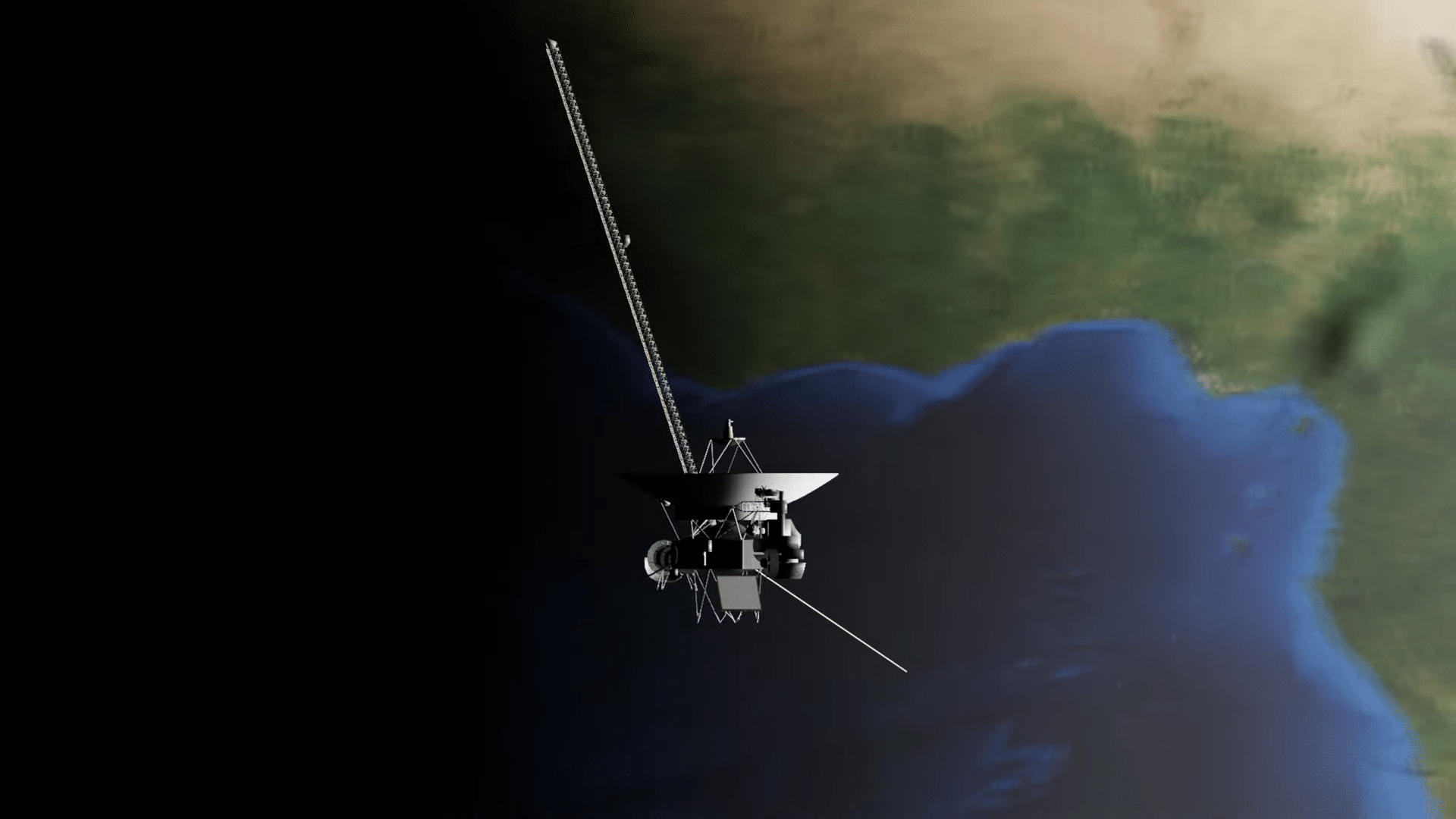
December 4, 2022, Gabriel Chenevert. Voyager II: A unique opportunity
December 4, 2022, Victor J. Hugo. How does light bend?

November 29, 2022, Fernanda D’Agostini Barsanti. Gravitational lensing: Finding the morning star
November 9, 2021, Noah Gassner. The concept of impetus: a new twist on an old idea

April 20, 2021, Ricky Puyana. Particles and waves are not the fundamentals building blocks of our universe | modern theory of impetus

November 28, 2020, Ricky Puyana. The fragment: the primitive stuff from which everything originates

May 26, 2021, Marley Cook. Go with the flow

May 31, 2021, Alex Gellios. On spacetime impetus

December, 1993, Larry M. Silverberg. Space shuttle experiment 2: callibration of ground-based radar to see incoming intercontinental missiles
Major Contributions
2008 – present Spacetime dynamics
- Silverberg and Eischen 2025: Study of the role of proper time in relativistic mechanics.
- Silverberg and Eischen 2023: Developed a mathematical proof of the parity between relativistic mechanics (employing flat spacetime and a relativistic universal law of gravitation) and the corresponding Schwarzschild problem in general relativity (employing the curved Schwarzschild metric).
- Eischen and Silverberg 2022: Conducted an exhaustive comparison between solutions to relativistic problems in mechanics and the corresponding solutions to the Schwarzschild problems in general relativity, demonstrating that they are identical.
- Silverberg and Eischen 2020: Developed a relativistic universal law of gravitation and, with it, demonstrated that a mechanics formulation predicts the same precession of Mercury and bending of light that general relativity predicts.
- Silverberg 2008: Published a monograph on spacetime dynamics
Selected references
Larry M. Silverberg 2026. “Reframing spacetime: the emphasis on proper time.” Physics Education, 61(2), 025012. https://iopscience.iop.org/article/10.1088/1361-6552/ae1ede
Larry M. Silverberg, and Jeffrey W. Eischen 2025. “The Minkowski metric equation with a metric triangle applied to the twin paradox.” Physics Education 60.5 (2025): 055029.
Larry M. Silverberg and Jeffrey W. Eischen 2023. “Trajectory of a Spacecraft When It Passes by a Gravitational Body During Interstellar Travel.” Journal of Spacecraft and Rockets 60.6: 1854-1870.
Larry M. Silverberg and Jeffrey W. Eischen 2020, “On a new field theory formulation and spacetime adjustment that predict the same precession of Mercury and the same bending of light as general relativity,” Physics essays, 33(4), 489-512. https://doi.org/10.4006/0836-1398-33.4.489
Larry M. Silverberg 2008. Field theory for the engineer and the applied scientist, Wiley-VCH, ISBN-13: 978-3527407880
2003 – 2011 Basketball dynamics
- Silverberg, Tran, and Adcock 2003: Developed a general numerical formulation for the dynamics of the basketball shot that can be used to improve individual shooting and statistical accuracy of the release.
- Tran and Silverberg 2008: Found the optimal release conditions for the free throw in men’s basketball.
- Silverberg, Tran, and Adams 2011: Showed that the optimal targets for the bank shot are observable at the intersection of a vertical pole behind the backboard and a V-shaped pattern on the backboard.
- Fisher 2018: Writes a book on the physics of the free throw, with a special book chapter by Silverberg
- Silverberg, Tran and Laue 2018: Compared men and women free throws over a thirty year period – finding that women were slightly more consistent.
- Silverberg and Tran 2024: Developed a new formulation for the dynamics of the basketball shot based on the principles of event dynamics, enabling the rapid and accurate computation of millions of trajectories and corresponding statistics.
Selected references
Larry M. Silverberg, Chau Tran, and Kit Adcock 2003 “Numerical analysis of the basketball shot,” J. Dynamic Systems, Measurement, and Control, December, 125(4): 531-540, doi.org/10.1115/1.1636193
Chau M. Tran & Larry M. Silverberg 2008 “Optimal release conditions for the free throw in men’s basketball,” Journal of Sports Sciences, 26:11, 1147-1155, DOI: 10.1080/02640410802004948
Larry M. Silverberg, Chau M Tran, and Taylor M. Adams 2011 “Optimal Targets for the Bank Shot in Men’s Basketball,” Journal of Quantitative Analysis in Sports: Vol. 7: Issue 1, Article 3. DOI:10.2202/1559-0410.1299
Bob J. Fisher, Straight Shooter, Telemachus Press, 2018, ISBN 9781948046138
Larry M. Silverberg, Chau M. Tran, and Christopher Laue 2018. “Gender comparison in consistency in the basketball free throw by an event-driven approach.” Sports Engineering 21.4: 333-340.
Larry M. Silverberg and Chau M. Tran 2024. “High performance computing of the nonlinear dynamics of a basketball.” Nonlinear Dynamics 112.16: 14093-14105.
2009 – 2015 Unmanned vehicles
- Levedahl and Silverberg 2009: Developed a general formulation for control of underwater vehicles in full unsteady flow.
- Edwards and Silverberg 2010: Introduced a method for unmanned aerial vehicles to locate and fly in thermals while unpowered.
- Powers and Silverberg 2020: Extended the unpowered flight methodology to unstructured (lumbering) unmanned aerial vehicles.
Selected references
Blaine A. Levedahl and Larry M. Silverberg, “Control of Underwater Vehicles in Full Unsteady Flow,” in IEEE Journal of Oceanic Engineering, vol. 34, no. 4, pp. 656-668, Oct. 2009, doi: 10.1109/JOE.2009.2027798.
Daniel J. Edwards and Larry M. Silverberg, “Autonomous Soaring: The Montague Cross-Country Challenge,” J. Aircraft, Vol. 47, No. 5, September-October 2010, p. 1763-1769.
Thomas C. Powers, Larry M. Silverberg, and Ashok Gopalarathnam. “Artificial lumbered flight for autonomous soaring.” Journal of Guidance, Control, and Dynamics 43.3 (2020): 553-566.
1992 – 2013 Robotics and systems
Tschida and Silverberg 2013: Introduced a novel approach to truss structure shape design, drawing inspiration from biological processes.
Silverberg and Gardiner 1992: Developed an informal gradient method of controlling motion of a robot that resembles a water skier.
Silverberg and Levedahl 2005: Developed a direct approach and explained the inherent problems with the nearest-neighbor approach in aircraft formations.
Selected references
Larry M. Silverberg and John Richard Gardiner 1992 “Control of the motion of a headless water skier,” Mathematics and Computers in Simulation, Vol 34, Issue 2, August, p. 163-181.
Larry M. Silverberg and Blaine A. Levedahl 2005 “Autonomous coordination of aircraft formations using direct and nearest-neighbor approaches, J. Aircraft, Vol. 42, No. 2, March-April, p. 469-477.
Colin E. Tschida and Larry M. Silverberg 2013 “Cellular growth algorithms for shape design of truss structures,” Computers & Structures, Vol.116, 15 January, p. 1 – 6.
1996 – 2000 Electrodynamic methods and apparatuses
- Larry M. Silverberg 1992: Developed a thin membrane space-based antenna with high pointing accuracy
- Silverberg and Weaver 1996: Formulated the governing equations for dynamics and control of electrostatic structures.
- Silverberg and Stanley 1996: Experiment demonstrated highly flexible adaptable antenna
- Silverberg 1998: Developed a method of opening/closing blinds encased in insulted glass by electrostatic means.
- Stanley and Silverberg 1999: Experiment of electrostatically-shaped reflector showed pointing and bean-width control of a radiating surface.
- Kiefer, Silverberg and Gonzolez 2001: Studied the heat transfer in electrostatically actuated window blinds.
- Silverberg and Duval 2003: Developed a method of switching the states of permanent magnets through on-board magnetization.
- Silverberg and Farmer 2004: Showed that trans-permanent actuation is well-suited for spacecraft pointing, shape control, and deployment applications.
Selected references
Larry M. Silverberg 1992 “Electrostatically Shaped membranes,” US Patent 5307082A
Larry M. Silverberg and L. Weaver Jr. 1996 “Dynamics and control of electrostatic structures,” Applied Mechanics, June 1996, 63(2): 383-391, doi.org/10.1115/1.2788876.
Larry M. Silverberg and Robert Stanley 1996 “Space-based electrostatic antenna design with pointing and beam width control,” Spacecraft and Rockets, Vol 33, No. 6, November-December, p. 843-847.
Larry M. Silverberg 1998 “Electrostatically positioned blind Insert for insulated glass,” US Patent 5850861
Robert J. Stanley, Larry M. Silverberg 1999 “Paraboloidally shaped antenna possessing pointing and bean-width control,” Spacecraft and Rockets, Vol. 36, No. 5, September-October, p. 736-744.
Scott F. Kiefer, Larry M. Silverberg, and Manoel L. Gonzolez 2001 “Electrostatically actuated window blinds,” Vol. 50, Issue 4, March, p. 229-248.
Larry M. Silverberg and Luis Duval 2003 “Analysis of Trans-permanent Magnetic systems,” J. Dynamic, Systems, Measurement, and Control, March, 125(1): 143-146. doi.org/10.1115/1.1543553
Larry M. Silverberg and Dan Farmer 2004 “Trans-permanent magnetic actuation for spacecraft pointing, shape control, and deployment,” Spacecraft and Rockets, Vol 41, No. 6, November-December, p. 1051-1055
1991 – 1994 Protection against intercontinental missiles
Program director – Larry M. Silverberg, Sponsor – NASA Johnson Space Center
- Directed a program whose purpose was to calibrate the space-command’s worldwide array of ground-based radar to be able to see incoming intercontinental missiles
- Developed a method and apparatus wherein the space shuttle would release spheres of known physical size and albedo into low-earth orbit in order to calibrate ground-based radars and optical telescopes with small objects.
Program chronology
- 1991 academic year (fall and spring): 40 NCSU students divide into 4 teams, and fabricate 4 competing prototype designs
- 1991 summer: Flight systems of two of the four designs are fabricated (OEM-6 and OE-6 designs). NASA selects the OE-6 design
- 1991 November: Orbiter Ejector OE-6 delivered to NASA JSC
- NASA certification:
- Vibration testing – February 1992
- Thermal Vacuum Testing – April 1992
- EMI (Electromagnetic Interference) Testing – June 1992
- July 1992: Delivery to Kennedy Space Center (KSC)
- December 1992: Orbiter Ejector flown aboard Shuttle flight STS-47. Experiment fails due to dead battery.
- December 1993: Orbiter Ejector re-flown successfully on shuttle flight STS-53.
- August 1994: Orbiter Ejector flown successfully on shuttle flight STS-60.
- November 1994: Program established at NASA JSC to continue calibration under oversight of the department of defense.
Sphere Ejection Parameters
| Ejection Order | Diameter (inches) | Mass | Exit Velocity (m/s) | Composition |
| 1 | 4.000 | 4.256 | 2.85 | 440 SS |
| 2 | 4.000 | 4.256 | 2.45 | 440 SS |
| 3 | 2.000 | 0.532 | 2.13 | 440 SS |
| 4 | 2.000 | 0.532 | 1.85 | 440 SS |
| 5 | 6.000 | 5.000 | 1.61 | 6061-T6 AL |
| 6 | 6.000 | 5.000 | 1.40 | 6061-T6 AL |
Selected references
Larry M. Silverberg 1992 “Design and flight hardware fabrication of the OE-6 orbiter ejector,” AIAA Space Programs and Technologies Conference, NASA 92-1282, January
1991 – 1996 Fuel-optimal (impulse) control
- Foster and Silverberg 1991: Developed a minimum-fuel heuristic for control of flexible structures
- Redmond and Silverberg 1992: Compared optimal bang-bang, optimal continuous, and optimal impulse control on benchmark problems showing optimal impulse is 25% to 35% more fuel-efficient.
- Redmond, Meyer, and Silverberg 1993: Conducted an experiment that demonstrates impulse damping control of a vertically suspended 16 foot long beam
- Silverberg 1992: Developed impulse damping control algorithms for distributed spacecraft systems.
- Silverberg and Meyer 1993: Conducted an experiment that demonstrates fuel-optimal slewing in the horizontal plane of a hinged-free beam
- Redmond and Silverberg 1994: Presented an exact solution to the fuel-optimal propulsive control problem and a near optimal solution that consumes 8% more fuel than the optimum.
- Meyer and Silverberg 1996: Conducted a landmark experiment that demonstrates fuel-optimal control of a space-like structure having five rigid-body modes and a multitude of flexible-body modes.
Selected references
- Foster, L. M. Silverberg 1991 “On-Off decentralized control of flexible structures,” J. Dynamic Systems, Measurement, and Control, March, 113(1): 41-47, doi.org/10.1115/1.2896357
Redmond and Larry M. Silverberg 1992 “Fuel consumption in optimal control,” Guidance, Control, and Dynamics, Vol 15, No. 2, March-April, p. 424-430.
Redmond, J. L. Meyer, and L. M. Silverberg 1993, “Impulse Damping Control of an Experimental Structure,” Sound and Vibration, Vol. 160, Issue 1, p. 179-186, January, 10.1006/jsvi.1993.1015
Larry M. Silverberg 1992, “Light Impulsive Damping of Spacecraft Exhibiting Normal Mode Behavior,” Guidance, Control, and Dynamics, Vol 15, No. 1, p. 114-120.
Larry M. Silverberg and John L. Meyer 1993 “Fuel-optimal slewing of an experimental hinged-free beam,” J. guidance, control, and dynamics, Vol 16, No. 6, November-December, p. 1162-1168.
Redmond and Larry M. Silverberg 1994 “An exact solution to the fuel-optimal propulsive control of a tutorial structure,” Sound and Vibration, Vol 171, Issue 1, March, p. 23-33.
- Meyer and Larry M. Silverberg 1996 “Fuel-optimal Propulsive Maneuver of an experimental structure exhibiting space-like dynamics,” guidance, control, and dynamics, Vol 19, No. 1, January-February, p. 141-149.
1989 – 1993 Modal identification
- Norris and Silverberg 1989: Introduced a method of identifying modal quantities, exploiting spatial and temporal orthogonality.
- Silverberg and Kang 1989: Developed a new method of modal identification based on a variational problem that seeks stationary values of a quotient.
- Norris and Silverberg 1990: Extended their modal identification method for self-adjoint systems to gyroscopic systems.
- Norris, Kahn, Silverberg, and Hedgecock 1993: Conducted experiments with their method of modal identification for self-adjoint structures.
Selected references
Mark A. Norris and Larry M. Silverberg 1989, “Modal Identification of self-adjoint distributed-parameter systems,” Earthquake Engineering & Structural Dynamics, Vol. 18, Issue 5 p. 633-642, July, doi.org/10.1002/eqe.4290180504
Larry M. Silverberg and S. Kang 1989, “Variational Modal Identification of Conservative Non-gyroscopic Systems,” J. Dynamic Systems, Measurement, and Control, June, 111(2): 160-171, doi.org/10.1115/1.3153032
Mark A. Norris and Larry M. Silverberg 1990, “Modal Identification of Gyroscopic Distributed-Parameter Systems,” AIAA journal, Vol. 28, Issue 12, 2104-2109, December, DOI: 10.2514/3.10528
- A. Norris, S. P. Kahn, L. M. Silverberg, and C. E. Hedgecock 1993, “Temporal correlation method for modal identification of lightly damped structures,” Sound and Vibration, Vol. 162, Issue 1, 22, March, p. 137-146.
1983 – 1994, Modal control
- Meirovitch and Silverberg 1983: Extended the Independent Modal-Space Control (IMSC) method to systems with viscous damping, circulatory forces and aerodynamic forces.
- Silverberg and Yunis 1986: Showed that compromises in structural feedback control are endemic to their formulations, whether formulated as underdetermined, as uniquely determined, or as overdetermined.
- Silverberg 1986: Developed the uniform damping principle for control of distributed systems, showing that the controller is independent of stiffness, control forces proportional to the mass distribution, decentralized, and approximates the solution to the globally optimal control problem.
- Silverberg and Morton 1989: Showed inherent properties of natural control (IMSC) – fuel consumption that is near-optimal, and open-loop and closed-loop frequencies and modes that are nearly identical.
- Silverberg 1990: Argued that a new area of civil engineering in space is emerging, and that motion control of space structures is fundamentally a civil engineering problem.
- Weaver and Silverberg 1992: Introduced a method of applying discrete, decentralized actuators at nodes of distributed systems.
- Silverberg and Washington 1994: Developed a method of varying the shape of thin membrane space-based antennas to maximize far-field power received.
Selected references
Meirovitch and Larry M. Silverberg 1983 “Control of non-self-adjoint distributed-parameter systems,” The 22nd IEEE Conference on Decision and Control, 1983, pp. 281-285, doi: 10.1109/CDC.1983.269842.
Larry M. Silverberg and Isam S. Yunis 1990 “The compromise inherent in structural feedback control,” Applied Mathematical Modelling, Volume 14, Issue 7, July, p. 362-369.
Larry M. Silverberg 1986 “Uniform Damping Control of Spacecraft,” Journal of Guidance, Control, and Dynamics, Vol. 9, Issue 2, p. 221-227, March, 10.2514/3.20093
Larry. M. Silverberg and Mark Morton 1989 “On the nature of natural control,” Vibration, Acoustics, Stress, and Reliability. Oct., 111(4): 412-422 https://doi.org/10.1115/1.3269877
Larry M. Silverberg 1990 “Motion control of structures,” J. Aerospace Engineering, Vol 3, Issue 4, https://doi.org/10.1061/(ASCE)0893-1321(1990)3:4(223)
Weaver, Jr, and Larry M. Silverberg 1992 “Node control of uniform beams subject to various boundary conditions,” J. Appl. Mech. Dec., 59(4): 983-990, doi.org/10.1115/1.2894070
Larry M. Silverberg and Gregory Washington 1994 “Modal control of reflector surfaces using far-field power measurements,” Microwave and Optical Technology Letters (ISSN 0895-2477), vol. 7, no. 12, August, p. 588-593.