
- This event has passed.
MAE Seminar: Javier LLorca
Title:
Experimental and computational analysis of the effect of grain boundaries on the deformation of Ti
Abstract:
A combined experimental and simulation strategy is presented to evaluate the influence of gain boundaries on the deformation of Ti. From the experimental viewpoint, the ability of grain boundary to allow slip transfer or to block slip was studied in 3D. To this end, a pure Ti foil was scanned by 3D by diffraction contrast tomography prior to deformation. Mechanical deformation led to the activation of a prismatic slip, and slip transfer/blocking was assessed in > 300 grain boundaries by means of slip trace analysis, electron backscatter diffraction and high-resolutiondigital image correlation. The ability to predict slip transfer/blocking from the angles that define the orientation of the grain boundaries and the active slip systems was ranked according to the F1 score following a categorical model, which was also used to assess the accuracy of the slip transfer criteria proposed in the literature. The best performances were achieved with the angle k between the Burgers vectors of the incoming and outgoing slip systems, which is directly related to the residual Burgers vector, and to the Luster-Morris parameter m’ On the contrary, metrics based on the twist angle q and the LRB criteria always led to the poorest accuracy. This information was used to incorporate the effect of grain boundaries in a dislocation-based crystal plasticity model that can take into account whether a grain boundary allows or nor slip transfer. This novel crystal plasticity model was used to predict the Hall-Petch effect in Ti polycrystals by means of computational homogenization of a representative volume element of the microstructure was generated from the 3D data, ensuring a direct correspondence between model and microstructure. The analysis of the experiments alongside the numerical simulations provided a comprehensive understanding of the deformation mechanisms across grain boundaries in pure Ti polycrystals.
References:
E. Nieto-Valeiras, A. Orozco-Caballero, M. Sarebanzadeh, J. Sun, J. LLorca – Analysis of slip transfer across grain boundaries in Ti via diffraction contrast tomography and high-resolution digital image correlation: when the geometrical criteria are not sufficient. International Journal of Plasticity, 175, 103941, 2024.
E. Nieto-Valeiras, E. Ganju, N. Chawla, J. LLorca – Assessment of slip transfer criteria for prismatic-to-prismatic slip in Ti from 3D grain boundary data. Acta Materialia, 262, 119424, 2024.
E. Ganju, E. Nieto-Valeiras, J. LLorca, N. Chawla – A novel diffraction contrast tomography (DCT) acquisition strategy for capturing the 3D crystallographic structure of pure titanium. Tomography of Materials and Structures, 1, 100003, 2023
E. Nieto-Valeiras, S. Haouala, J. LLorca. – On the effect of slip transfer at grain boundaries on the strength of FCC polycrystals. European Journal of Mechanics/A Solids, 91, 104427, 2022.
Bio:
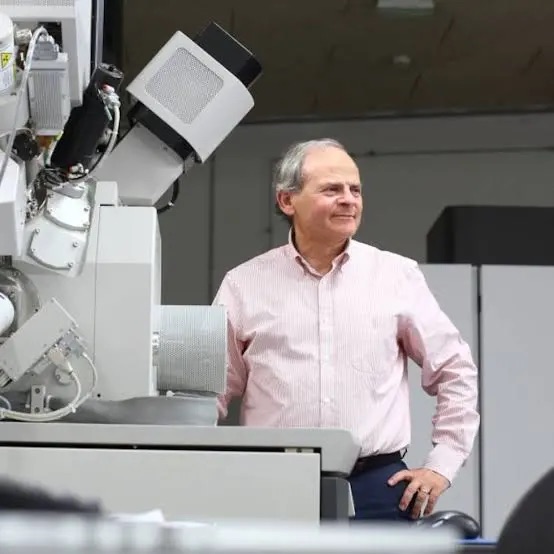 Prof. Javier LLorca is scientific director and founder of the IMDEA Materials Institute, where he leads the research group on Bio/Chemo/Mechanics of Materials, and professor and head of the research group on Advanced Structural Materials and Nanomaterials at the Polytechnic University of Madrid.
A Fulbright scholar, Prof. LLorca is Fellow of the European Mechanics Society and of the Materials Research Society, member of the Academia Europaea and has held visiting positions at Brown University, Indian Institute of Science, China Central South University, Yanshan University and Shanghai Jiaotong University. He has received the Leonardo Torres Quevedo National Research Award in Engineering, the Research Award from the Spanish Royal Academy of Sciences, the Morris Cohen Award of TMS, the Distinguished Scientist Award of the Structural Materials Division of TMS, the Science and Technology Award of the International Mg Society, the Research Award from the Polytechnic University of Madrid and the Career Award from the Spanish Society of Materials.
His current research interests – within the framework of Integrated Computational Materials Engineering – are aimed at the design of advanced materials for engineering applications in transport, health care (implants) as well as energy (catalysis), so new materials can be designed, tested and optimized in silico before they are actually manufactured in the laboratory.