Carter Completes the AFRL’s Summer Faculty Fellowship Program
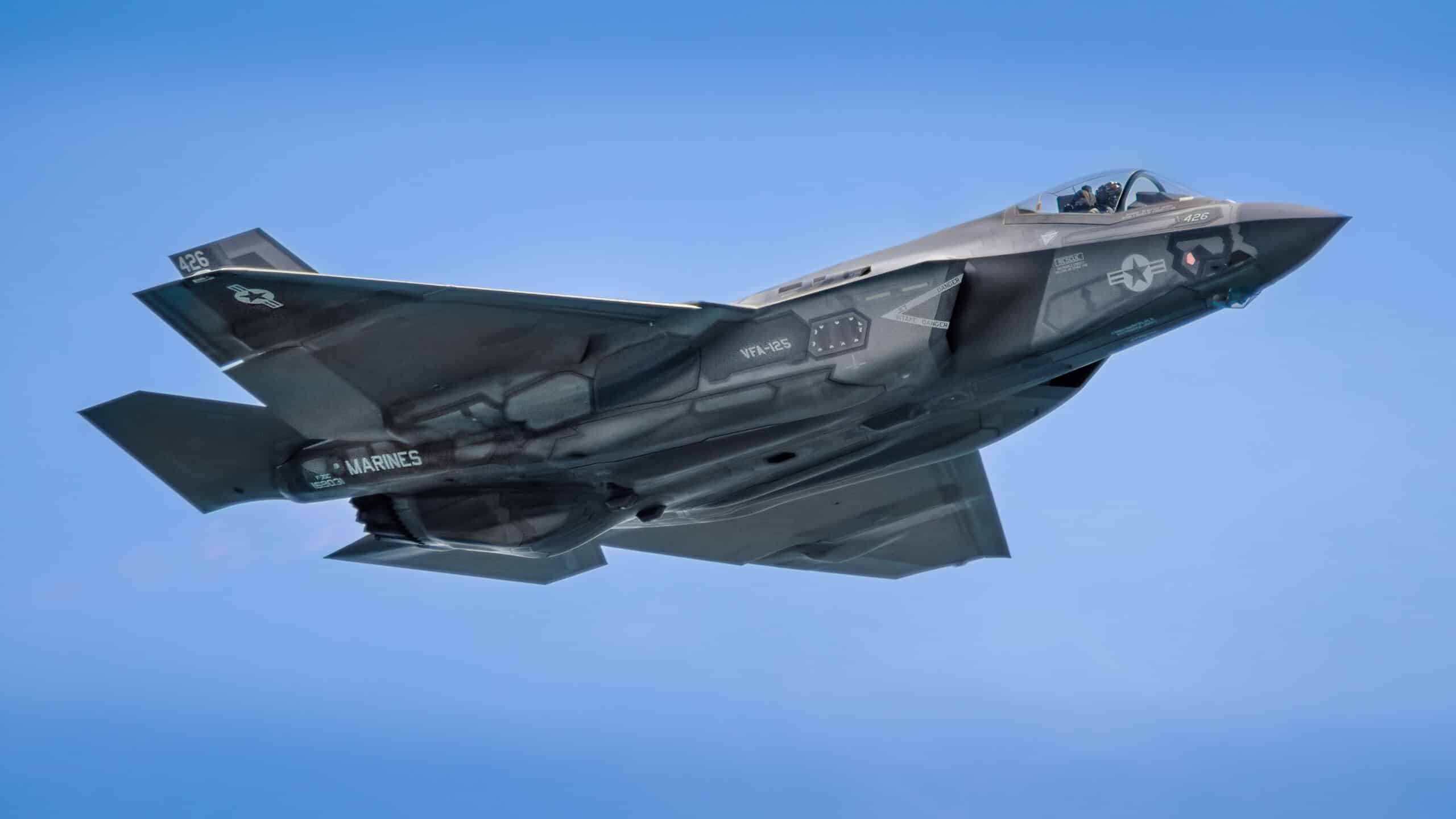
An assistant professor returned to NC State after gaining invaluable experience as a summer faculty fellow at the Air Force Research Lab (AFRL).
The AFRL is a military-operated base that tests and develops defense technologies. Darius Carter, assistant professor of Mechanical and Aerospace Engineering (MAE), worked at the Wright-Patterson Air Force Base in Dayton, Ohio this summer.
The base — named after aviation pioneers the Wright brothers — features the research lab, the Air Force’s National Museum and several other centers to conduct security, logistics and testing. Carter worked in the Air Warfare Vehicle Aerodynamics branch.
AFRL’s annual Summer Faculty Fellowship Program brings on 30 to 40 faculty to work in the labs, many bringing graduate students to work alongside them. Carter worked on base for 10 weeks this summer in the aerodynamics branch. He worked collaboratively with the team doing experimental and computational research. AFRL helps determine what future aircrafts will look like and need. Depending on their use cases, each vehicle will need to handle differently; AFRL does the testing that leads to their actual creation.
Carter brought his expertise in particle image velocimetry (PIV) and aerodynamic testing to the team. He and Aaron Altman, who works at AFRL, wrote a research proposal together, and funding from AFRL brought Carter on site. He was able to lead a research campaign this summer, and results are planned to be published later this year. During his time at AFRL, Carter did an aerodynamic study on a new vehicle concept where they looked at the flow physics in the wake behind the vehicle. As a vehicle moves forward, the wake is air that has been disturbed behind it. The team did tests in the base’s subsonic wind tunnel called the SURF in order to test forces on the vehicle, structural load and other functions of the wing. They used PIV to obtain velocity measurements.
Carter remarked on the funding capabilities at the research lab, witnessing how money can bring great equipment and more hiring flexibility. He also appreciated working with a team to run an experiment, saying it might provide a bit more accuracy.
The opportunity to further connect NC State and AFRL was not only beneficial to Carter himself, but to the university as a whole. Having one of our faculty members on the base allowed him to gain firsthand knowledge on aerodynamics, flow physics and testing and experimentation within our Air Force.
- Categories:


